

The EU's Carbon Border Adjustment Mechanism (CBAM) entered its definitive phase on 1 January 2026. Ahead of the first certificate surrender deadlines, the EU has been finalising the implementing legislation needed to fully operationalise the scheme.
On 16 November, the latest regulation was published, laying out the rules for how carbon pricing in the country of origin can be deducted from an importer's CBAM liability.
CBAM factfile
CBAM aims to ensure that imported goods pay equivalent carbon costs to EU manufactured goods.
CBAM covers sectors at high risk of carbon leakage: iron & steel, cement, fertilisers, aluminium, hydrogen and electricity.
Importers must calculate and report the embedded carbon emissions in covered products and surrender CBAM certificates to cover their liability.
CBAM certificate price is calculated as an average of EUA auction prices, quarterly throughout 2026 and weekly from 2027 onwards.
The new rules
For goods coming from countries with no carbon pricing regime, eventually for every tonne of embodied emissions the importer must surrender a CBAM certificate (priced at average ETS auction price).
For now, this obligation is being phased in as free allocation in the ETS is phased out.
For goods from countries with a carbon pricing regime, more complex calculations are required.
The theory is that the carbon cost already paid is deducted from the CBAM liability. The rules for how this works in reality, given the diversity of approaches to carbon pricing seen across the world, are what have just been agreed by the EU.
The key takeaways from these rules:
The regulation names 36 qualifying national and regional schemes. The European Commission will consider other schemes on a case-by-case basis and update the list annually.
The amount deducted is the carbon cost, not just the headline price per tonne. This means that any free allocations, exemptions, rebates, alternative credits etc. are considered in the calculations.
The EU will recognise carbon credits used for compliance. The price spent on credits cannot exceed the carbon price of other compliance options. International credits can cover up to 10% of emissions and are only recognised if issued under Article 6 of the Paris Agreement and must come from a country whose Article 6 trading arrangements have passed UN technical review. Domestic credits are not subject to these restrictions.
The Commission will publish default carbon prices per country. These are the only option where an importer uses default emission values, and importers can also choose to use them in place of submitting a certified carbon price report. These defaults are expected to be conservative.
These rules will apply retroactively from January 2026, covering all imports in CBAM's definitive phase.
CBAM compliance timeline
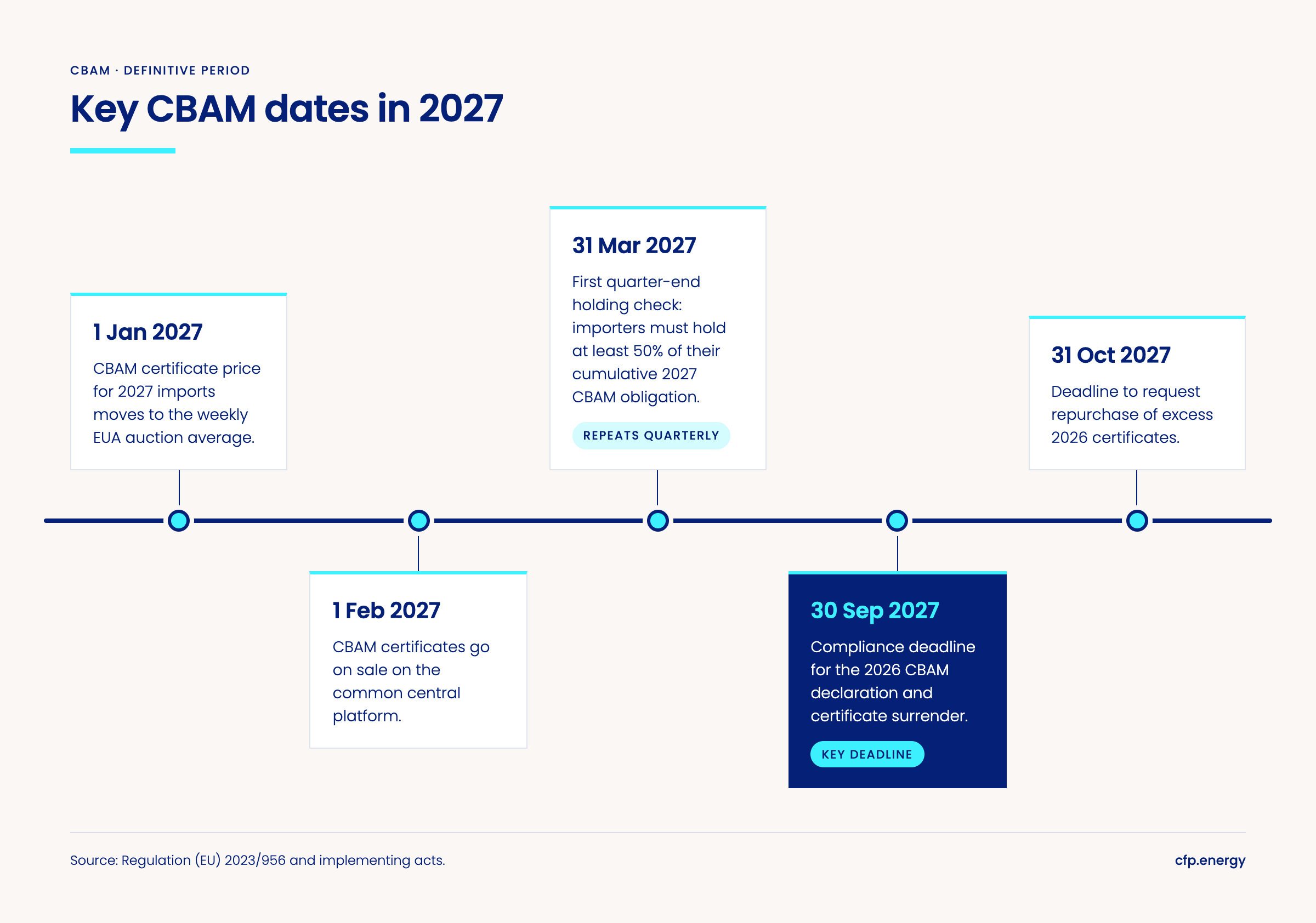
2027 is when CBAM becomes real: certificates can be purchased, the first surrender deadlines hit, and pricing becomes a lot more volatile with the shift to weekly averages rather than quarterly.
In this context, understanding the carbon market, how to price in CBAM costs, and the hedging solutions available is essential to managing your exposure.
Our team of carbon experts can help, here.
Get in touch or download our CBAM briefing here.

About the author: Polly Thompson
Polly Thompson is the Carbon Policy Lead at CFP Energy, focusing on policy and market analysis across compliance and voluntary carbon markets. She tracks regulatory developments and market trends, helping organisations navigate an evolving carbon landscape.
Related Articles



Share this article


