

Take off is approaching but the runway remains long...
ICE has launched a new liquidity programme for CORSIA futures, a small but significant step for a market that has struggled to take off.
Against a backdrop of limited decarbonisation levers and an EU regulatory review due this summer, aviation operators now more than ever need to have an effective carbon risk management strategy in place.
What’s new?
Intercontinental Exchange (ICE) has launched a Liquidity Provider Programme for 2026, selecting CORSIA options and futures contracts for both Phase 1 and Phase 2.
The programme will run from June 2026 to May 2027, offering incentives such as reduced exchange and clearing fees in exchange for continuously quoting two-sided prices within defined spread limits or trading minimum volumes.
Liquidity lacking
CORSIA futures activity has been minimal to date, caught in a familiar chicken-and-egg dynamic: traders won’t use a contract without liquidity, and liquidity won’t develop unless traders use it.
Procurement has been largely bilateral, leaving exchange-traded futures with little role.
The underlying spot market is thin on both sides. Eligible Phase 1 supply sits well under 50 million tonnes, constrained by IATA’s strict Carbon Standards criteria and, more significantly, the requirement for host-country Letters of Authorisation, which few governments have so far been willing or able to issue.
On the demand side, with the Phase 1 compliance deadline not until 31 January 2028, many airlines are not yet feeling pressure to lock in forward positions.
ICE’s programme is designed to break this deadlock, turning futures into a viable hedging tool, ready for the forecast 2027 demand jump as Phase 2 widens participation and tightens caps.
Jaclyn Foss, Head of Business Development, VCM, said:
“Airlines that treat CORSIA as a 2028 problem risk finding themselves competing for a thin supply pool against other compliance buyers. The infrastructure to manage that risk is starting to be built now and engaging with it early is likely to be more straightforward than catching up later.”
An uncertain landscape
An illiquid market is not the only factor delaying airlines’ engagement with CORSIA.
War in the Middle East has more than doubled jet fuel prices from pre-conflict levels, redirecting attention away from longer-term carbon hedging strategy.
Other decarbonisation strategies are being pursued, most notably sustainable aviation fuel, but with a slower impact than hoped.
SAF represented less than 1% of total jet fuel consumption in 2025, and production growth is projected to decelerate in 2026.
On the policy front, CORSIA faces a pivotal moment this summer, with a July deadline for the European Commission’s review of whether CORSIA is sufficiently aligned with Paris Agreement goals.
If it concludes that the global scheme is inadequate, the Commission could propose extending the EU ETS to cover a broader scope of international flights, superseding CORSIA.
In the near term however, airlines will still be on the hook for CORSIA obligations.
CORSIA crunch incoming
The temptation to wait is understandable, but the direction of travel is clear: the Phase 1 supply crunch and the Phase 2 step change are coming.
ICE’s liquidity programme is a useful move to develop the infrastructure needed for an effective market.
Airlines that engage early will be better placed than those still watching from the sidelines in 2027.
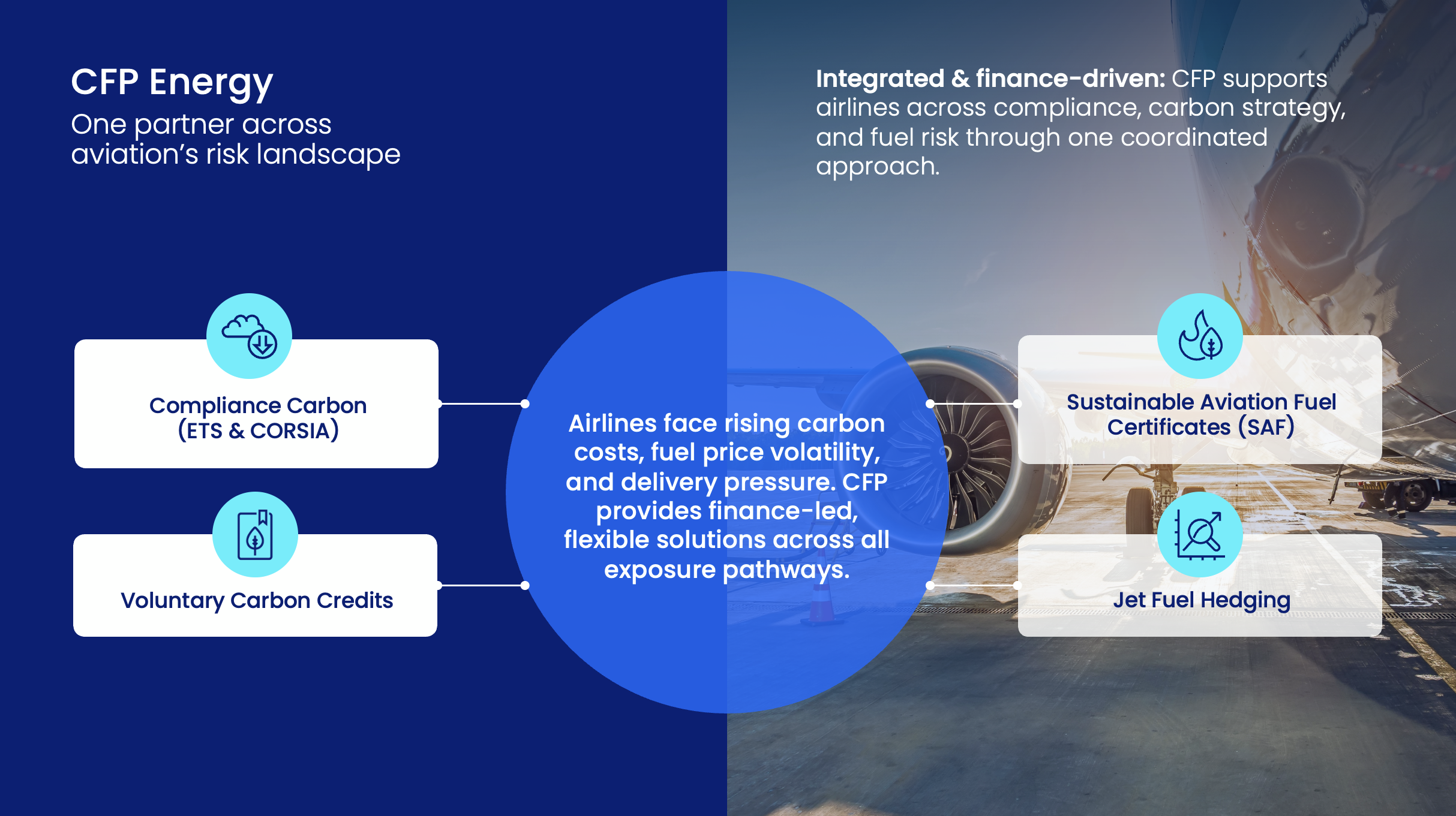
Whether you want to hedge compliance requirements, regularly purchase to better manage price risk or take advantage of our innovative structured products, CFP Energy can tailor a compliance solution for your needs.
Get clarity on CORSIA from our team here, now.
Aviation: Carbon Compliance Briefing 2026
Access our most recent industry briefing covering the aviation industry by entering your details below.
About the author: Polly Thompson
Polly Thompson is the Carbon Policy Lead at CFP Energy, focusing on policy and market analysis across compliance and voluntary carbon markets. She tracks regulatory developments and market trends, helping organisations navigate an evolving carbon landscape.
Related Articles



Share this article